
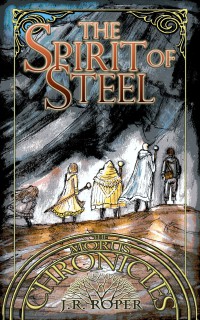
 Luke Spooner is a rising star in the illustration and cover art world. His work has been commissioned by many publishers such as Evolved Publishing, Pantheon Magazine, Bad Moon Books, Xchyler Publishing, Grey Matter Press, and Horrified Press, among dozens of others. I had admired Luke’s work while researching publishers and was excited to contact him once a cover for The Spirit of Steel was needed. To keep it quick, The Spirit of Steel needed something completely original (no stock photo would work) and illustrated to fit my middle grade audience. I am absolutely in love with my covers and working with Luke on ideas and details of the art was nothing but a pleasure. He is extremely talented and professional (hire him and you will be soooo happy). Without further delay, here is a short interview with the amazing Luke Spooner.
Tell us a little bit about yourself.
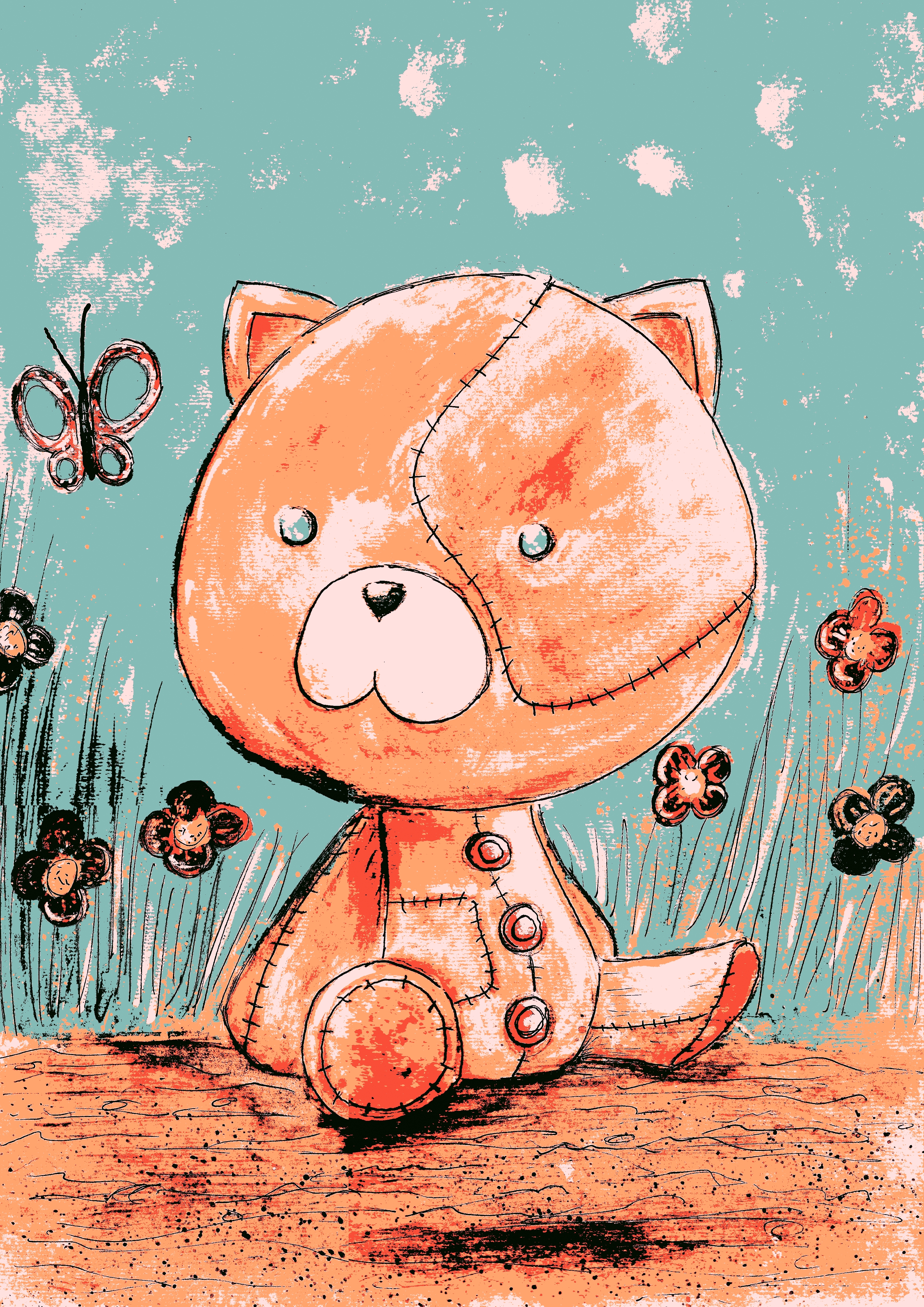
I’m Luke Spooner, a full time illustrator and artist. I live in the U.K. and also go by ‘Carrion House’ and ‘Hoodwink House,’ the former being an alias I produce my darker work through and the latter being used for my more child friendly work.
When did you know you were (or wanted to be) an artist?
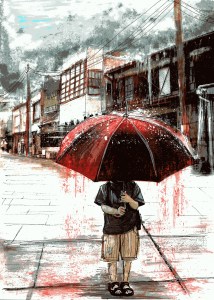
I was doodling from the moment I discovered pencils and things to scribble on. In those formative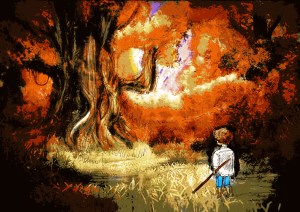 years it was just a way of reflecting and emulating what I loved; I used to draw my favourite characters from television shows, books – even imaginary characters that I’d make up and try to explain to others and write stories about. My Grandad, on my mother’s side, also used to draw a lot for his work at a building and construction group; drawing incredibly precise floor plans for buildings and intricate diagrams of how things like doors and windows would fit into any grand scheme that his clients might have. I used to watch him drawing very precise angles and slaving over clinically straight lines on a regular basis so I appreciated the value of simply drawing and its’ application to real life from a pretty young age.
The desire to communicate ideas through visual means actually developed earlier than my attempts at communicating through spoken language. However, as with any early attempt at communicating ideas they tended to make sense to a very specific audience – namely me, which meant that a lot of my drawings were met with amusement and confusion by onlookers but they could see I was enjoying it so nobody questioned it. It was my first port of call once I realized there were things I needed to get out of my head, but gradually, over time, it became a tap – a leaky faucet that you really had to put your back into if you were to have any hope of turning off. Even then it would still drip.
My family seemed to just ‘go with it’ and encourage it, they kept the drawings I did which, in turn, assigned them value, aside from reprimands when I drew on walls, radiators or gently dozing grandparents. It never occurred to me that some people just didn’t do it. As far as I could see it was just what hands were for but as with most things in life; once you arrive at school and find peers of your own age staring back at you, you notice people and they notice you, the things that separate you from them start to become clearer and clearer and in some cases take up actual, albeit invisible, space and push you apart into various social groups and hierarchy. When I started getting asked to draw this and draw that by other children, I noticed them staring at me and my collection of pencils and fine line pens in varying grades, colours, tones and styles with expressions of confusion as opposed to understanding – that’s when I started to realize that maybe it wasn’t something everybody needed, wanted or could do.
What is your process/ritual for creating the amazing artwork your fans have grown accustomed to?
 Well it starts with a client; when a client gets in touch they usually mention how they found me, followed swiftly by what it is they need and you can get a good gauge on just what kind of collaboration they’re proposing. After that the ‘typical enquiry’ goes out the window, people differ drastically in their initial proposal, which usually means I have to probe them for the information I require to get the job started. During these moments I try to cover things like budgets, deadlines, size specifications etc. until we get to the reading of any source material they have in mind for the requested piece. I really enjoy this part so I tend to throw myself into it at my earliest convenience, sometimes getting it done while waiting for clients to email me back about the other things I need to know. After all the fine details are ironed out and both parties are still interested in the collaboration I either return any notes I made on the source material and find out whether they want me to draw from any of my own thoughts or findings. Alternatively I can simply acknowledge that I’ve read it and get to work depending entirely on if the client wants to hear my notes or not.
Then it’s into sketching and designing, followed swiftly by painting which inevitably leads to waiting for the thing to dry but once dry and flattened I move into the inking and finer detail with pens, pencils, stamps, stencils – anything that makes a mark when covered in ink really. After that’s done I scan the piece in and tweak it digitally until I’m happy with it then send if off to the client. I’m sorry I can’t be more specific as to how I actually ‘do’ what I do by mentioning which paints, which brushes, pens etc. but artists can often live and die based on their ability to be unique and innovative so that’s about as far as I can go with that question.
From time to time, and usually quite out of the blue, you get a rare client who simply supplies an illustration brief and a friendly hello, so something along the lines of: ‘we want this like this, with one of those coming into frame from the right and that has to be the same colour as one of those’ and as you read it, you can feel the room for individual interpretation getting less and less until it becomes apparent that they’re pretty much paying you for your work’s aesthetic and your overall work ethic. It sounds like I’m being overtly negative but this isn’t necessarily a bad thing. Guidelines delivered in this manner can make a job far easier to tackle but it’s often a solid gold sign that the client has already made up their mind exactly how the end result will look and any creative flourish I choose to include, that isn’t in keeping with their vision, simply will not do.
The other end of the spectrum are those clients that get in touch with a super friendly; ‘love your work, I need a cover for a *insert genre here* collection, just go with it man, can’t wait to see what you do.’ This is, you might be surprised too hear, a double edged sword. As an artist the idea of freedom is awesome, it’s our proverbial bread and butter, but the potential for being very self indulgent is massive, so you have to really hope that the client loves your work as much as they claim to because they’ll inevitably get a very concentrated burst of it as their cover.
What is the best part of your job?
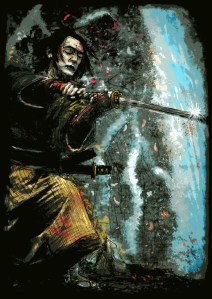
 Through their characters and stories I’ve seen writers explore the darkest recesses of their selves, seen them lay down some dark and tender home truths, own up to secret fears and phobias, state and justify bizarre beliefs and ultimately be themselves – even when their selves aren’t what they want them to be. The end result may be a fabrication but the process that the writers have been through to get to that point is honesty distilled and purified to its very essence. On top of that they then give it to other people to read. As an illustrator I know that fabricating fiction is a lot harder than telling the truth and it’s an honour to have people approach me to assist in making their words visual.
What is most challenging about your job?
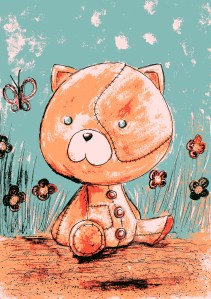 The nature of being freelance means that you’re not just the art department of your business, you’re also; the marketing team, the publicist, the accountant, the social media co-ordinator, the art supply finder and the client correspondent. You have to be doing everything, all the time and if you’re not then your business is at a stand still. There’s nobody else to hold down the fort and the idea of hiring someone to make that possible is unthinkable as I’ve created my business to suit me and my style of work. It’d be like hiring someone to mimic my handwriting. I also work from home so I don’t really have the separation of leaving my work at work and having a ‘home life.’ The two are one and the same and my work hours don’t have any parameters or limits – if a client gets in touch at midnight wanting a book cover in three hours’ time then that’s exactly what they get. It sounds mad when I write it out like this but this is the ethos I’ve adopted and I thoroughly believe in two principles that require this ethos to be steadfast; what I put into my work – I will get out of it in some form or another, and secondly; I’m doing something I love, something that only I can do for a profession and am getting paid to do it which is something that not a lot of people can lay claim to.
What upcoming projects are you most excited about?
I unfortunately can’t say a huge amount about the projects that are currently in the pipeline but people who follow my work in one way or another can rest assured that the projects they’ll be seeing over the next month or so are projects that have definitely forced me to step out of my comfort zones, both for my children’ book work and my darker. Something I always aim to do is to push myself as a creative individual and hopefully explore and expand my own style of illustration in the process and hopefully people will see that growth being very much present in the upcoming pieces set to appear online.
Where can people find you online and how should they contact you about potential artwork?
My portfolios are:
Darker work:
www.carrionhoue.com
www.facebook.com/carrionhouse
www.twitter.com/carrionhouse
Children’s Book work:
www.hoodwinkhouse.com
www.facebook.com/Hoodwinkhouselukespooner
People can feel free to message me via any of those or for a more direct line they can email me at spoonsryuzaki@hotmail.co.uk


 Author J.R. Roper